The multi-level marketing (MLM) and direct selling industry is going through a structural shift in 2026. Several established MLM brands have pivoted away from the network marketing model entirely. In each case, the reason cited was the same: the traditional model — particularly single-structure compensation plans — was not delivering the retention, income consistency, or growth momentum needed to compete in the current market.
What is replacing it for founders and experienced distributor leaders who remain committed to direct selling? The Hybrid compensation plan. And specifically, the Binary + Unilevel combination that gives distributors immediate income from the Unilevel side while building long-term team wealth through the Binary structure.
This guide covers everything you need to know — how Hybrid plans work, what software can support them, how to keep them FTC-compliant, and how to design one whether you are launching your first direct selling company or rebuilding an independent network after a brand transition. Our consulting team has configured Hybrid Binary + Unilevel plans for direct selling founders across health & wellness, beauty, and personal care launches, and the patterns below reflect what we've seen work — and fail — in practice.
Key Takeaways :
Hybrid plans combine the strengths of multiple compensation structures — Combining Binary and Unilevel, for example, can provide both frontline earning opportunities and incentives for building a deeper organization.
The plan should balance simplicity with earning potential — A compensation plan can offer multiple earning mechanisms, but distributors must still be able to understand how they qualify and how their commissions are calculated.
Different components should serve different growth objectives — Unilevel can encourage direct sales and frontline development, while Binary can encourage team building and balanced organizational growth.
Hybrid compensation requires powerful commission technology — Automated calculations, real-time volume tracking, qualification rules, genealogy management, and transparent commission reporting are essential for accurately operating a complex plan.
A sustainable hybrid plan must prioritize compliance and customer value — The compensation structure should reward genuine product sales and customer activity while maintaining clear qualification rules, transparent earnings information, and appropriate compliance controls.
Distributor churn by Month 6 on a correctly designed Hybrid plan (2026 data)
Month-over-month network growth by Month 6 on Binary + Unilevel Hybrid
Hybrid plans — confirmed top compensation trend in MLM industry, 2026
The year hybrid plan adoption surpassed single-structure Binary and Unilevel plans
What Is a Hybrid MLM Compensation Plan?
A Hybrid MLM compensation plan integrates two or more compensation structures commonly Binary and Unilevel into one unified system. The Binary side builds team depth and long-term residual income. The Unilevel side provides immediate direct referral bonuses that retain new distributors in their first 90 days. The combination produces lower churn and more sustainable month-over-month network growth than either structure alone.
In practice, a Binary + Unilevel Hybrid works like this:
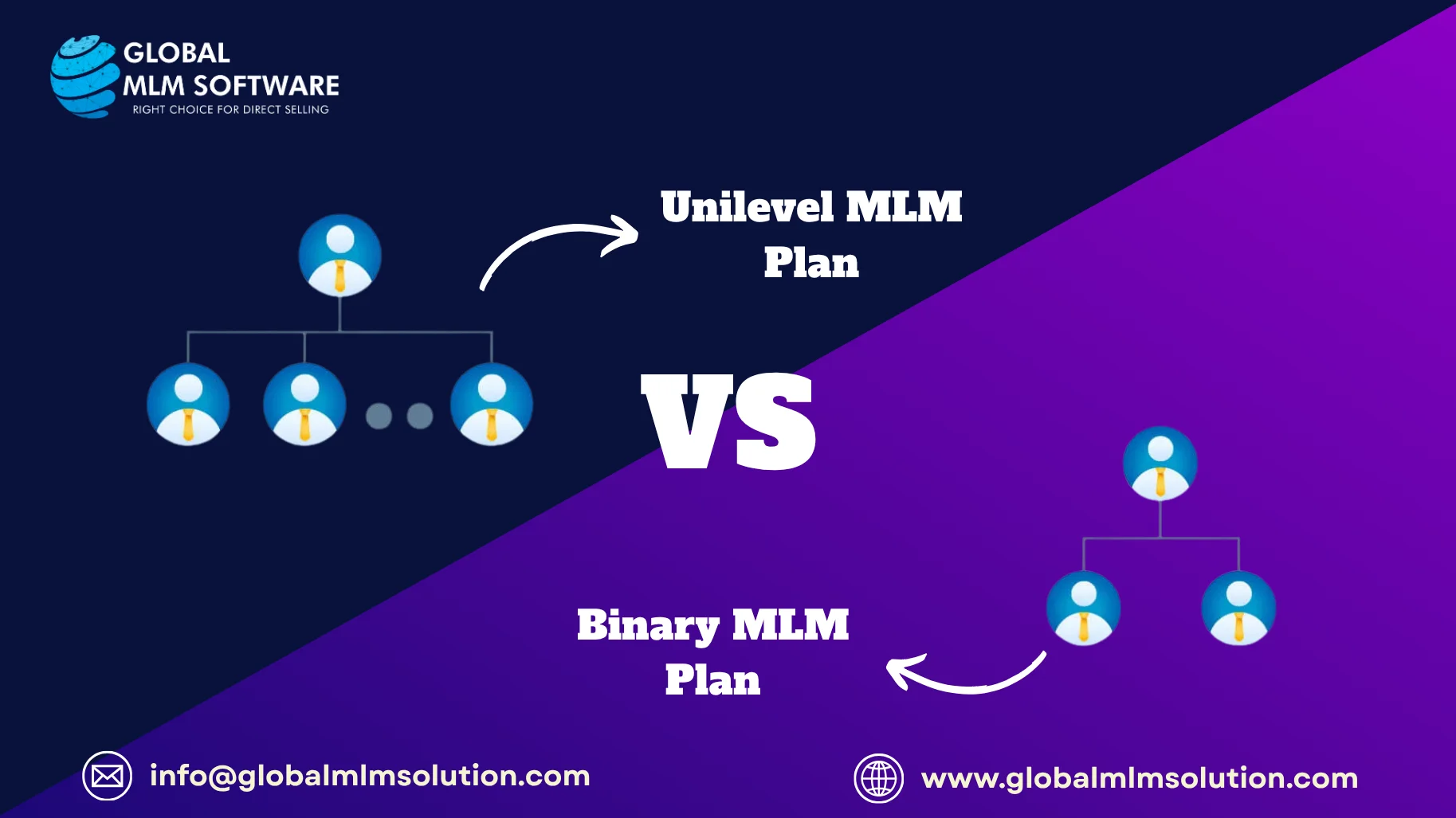
Binary layer: Each distributor builds two legs (left and right). Commissions are paid based on the weaker leg's volume. This rewards team building, spillover, and long-term depth. Top earners in Binary structures build large, balanced networks over 12–24 months and earn significant residual income from team activity.
Unilevel layer: Each distributor can sponsor unlimited members on their frontline. Commissions are paid level by level — typically 5–9 levels deep — on the sales volume of everyone in their personal downline. This rewards personal selling and direct recruitment. New distributors can earn commissions within their first week of enrollment by making their own retail sales.
Combined effect: New distributors earn immediately from Unilevel activity (reducing early churn). Experienced leaders build long-term Binary networks (creating retention at the leadership level). The company benefits from both network width and depth in one plan.
Why this matters: The single most common reason new distributors go inactive in the first 60 days is that they earn nothing from their initial effort. Binary-only plans require building both legs before commission is triggered — which takes time. The Unilevel component of a Hybrid plan eliminates this gap by paying on personal sales and direct referrals from enrollment day one.
What Is the Difference Between Binary, Unilevel, and Hybrid MLM Plans?
Binary MLM plans have two legs and pay commissions based on the weaker leg's volume. Unilevel plans allow unlimited frontline width and pay level-by-level commissions. Hybrid plans combine both structures for immediate income and long-term depth. Here is how they compare across the criteria that matter most in 2026.
Structure: Two legs. Commission on weaker leg volume.
Best for: Fast recruitment-focused networks. Team building over 12+ months.
Strength: Strong spillover mechanics. Rewards supporting your downline. Long-term residual potential.
Weakness: New distributors earn nothing until both legs are active. Higher early churn. Requires strict retail monitoring for FTC compliance.
Structure: Unlimited frontline. Commission paid level-by-level (typically 5–9 levels).
Best for: USA startup founders in H&W, Beauty, and Personal Care. Retail-focused businesses.
Strength: Immediate retail commissions from day one. Simplest to explain to new distributors. Strongest FTC compliance posture.
Weakness: Limited depth incentive for building large teams. Less residual income potential at leadership levels compared to Binary.
Structure: Dual engine — Binary for depth, Unilevel for frontline.
Best for: Founders who want both immediate distributor income AND long-term network building. The widely adopted structure for most 2026 USA launches.
Strength: Immediate income reduces early churn. Depth structure rewards long-term builders. Best of both plans in one system.
Weakness: Requires software that can run dual commission engines simultaneously. More complex to explain to distributors than single-structure plans. Specialist design guidance strongly recommended.
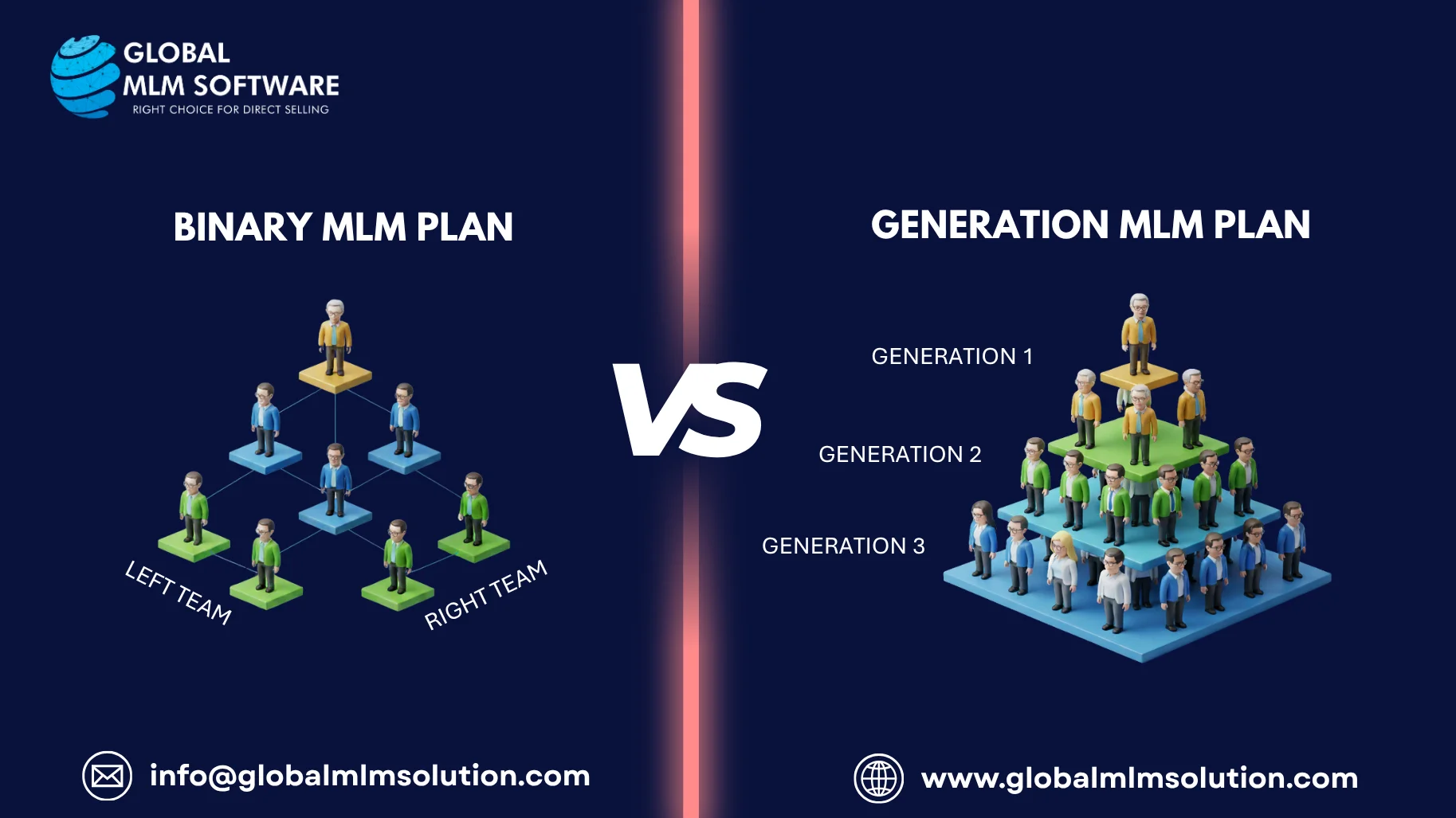
Structure: Pays on volume difference between ranks across multiple generations.
Best for: Large established direct selling companies with mature distributor leadership. Herbalife, Amway-style operations.
Strength: Extremely powerful for long-term leadership retention. Deep residual income for top earners.
Weakness: Complex for new distributors to understand. Not recommended for startup founders. Requires large network to generate meaningful income.
| Dimension | Binary | Unilevel | Hybrid (Binary + Unilevel) | Generation |
|---|---|---|---|---|
| Day-1 distributor income | Slow | Immediate | Immediate (Unilevel side) | Delayed |
| Long-term leadership rewards | Strong | Moderate | Strong (Binary side) | Very strong |
| FTC retail compliance | Requires monitoring | Most FTC-friendly | Manageable with software | Complex |
| Distributor churn (Month 6) | 20–35%+ | 15–25% | <15% (documented 2026) | Varies |
| Software complexity | Moderate | Low | High — requires dual engine | Very high |
| Recommended for 2026 startup | With caution | Yes — simple launches | Yes — optimal choice | Not recommended |
Why Are Hybrid MLM Plans the Top Trend in 2026?
Hybrid MLM plans are the top trend in 2026 because they solve the core tension that has caused high early-stage distributor churn in single-structure plans for decades. The Binary-only plan's requirement to build two active legs before earning commissions creates a gap period — often 30 to 90 days — where new distributors invest time and money without seeing income. That gap is the primary driver of early churn.
The Unilevel component of a Hybrid plan closes that gap entirely. New distributors earn a direct referral bonus every time someone they personally sponsored makes a sale — from day one. They earn retail commissions on their own sales immediately. The immediate income signal in the first 30 days is the single strong retention mechanism in MLM compensation design.
At the same time, the Binary depth structure gives your top performers a reason to stay and build for the long term. Leaders who have invested 12+ months building a Binary network do not leave. The team volume commissions from a large Binary organisation represent genuinely significant residual income — something a flat Unilevel structure cannot fully replicate for deep network builders.
The Hybrid plan gives you both. Immediate income retains new distributors during their first 90 days, while long-term depth rewards encourage leaders to stay and grow for years. And in 2026, multiple independent industry analyses have confirmed that the Binary + Unilevel Hybrid combination — sometimes called the Hybrid Binary Unilevel or the combined plan — is the dominant compensation design trend for new direct selling launches.
What Software Do I Need to Run a Hybrid MLM Compensation Plan?
Running a Hybrid MLM compensation plan requires software capable of managing multiple compensation rule sets simultaneously. It should calculate Binary weak-leg volume alongside Unilevel commissions in real time while providing distributors with accurate earnings and transparent reporting. Manual calculation of Hybrid commissions is not viable beyond 20 distributors.
Based on the Hybrid plan implementations our team has configured for clients, here is what your software must be able to do specifically for a Hybrid plan
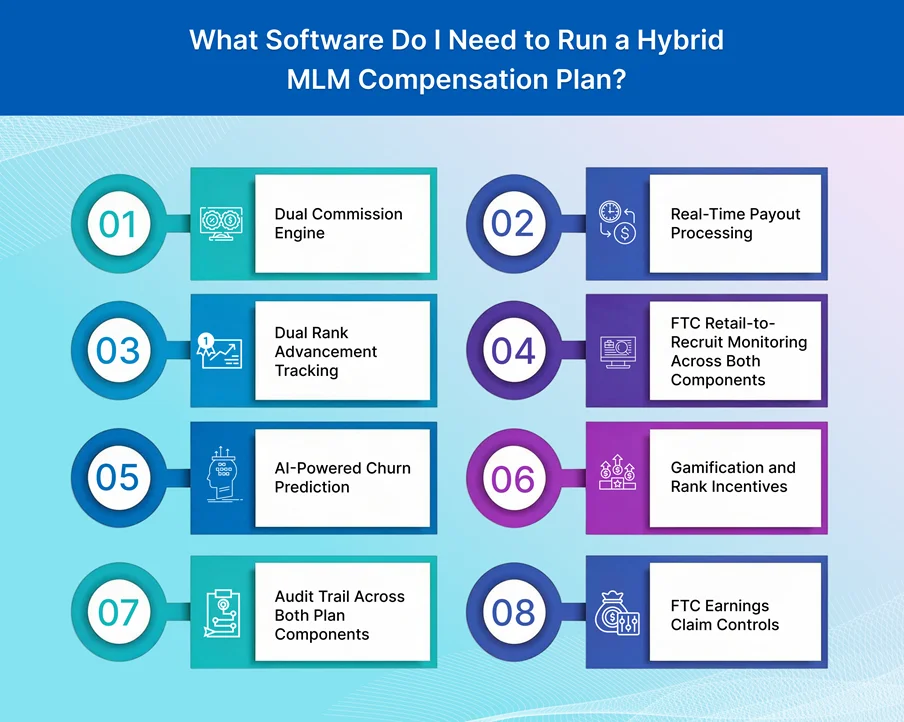
Dual Commission Engine : Two parallel calculation systems running simultaneously — one for Binary (weak-leg volume, caps, flush rules, matching bonuses) and one for Unilevel (level commissions, depth limits, personal volume requirements (PV)). Both calculate on every transaction and consolidate into a single distributor payout.
Real-Time Payout Processing : Hybrid plan commissions must be calculated in real time — not in weekly or monthly batch runs. Distributors expect to see their Unilevel earnings reflect their sales activity the same day. Batch processing creates trust issues that increase churn.
Dual Rank Advancement Tracking : Rank advancement criteria in a Hybrid plan draw from both plan components — Binary volume, Unilevel depth, personal retail sales, and combined network volume. The software must track all qualification criteria simultaneously and notify distributors when they are close to advancement.
FTC Retail-to-Recruit Monitoring Across Both Components : The FTC's retail primacy requirement applies to the combined plan — not just the Unilevel side. Your software must monitor retail-to-recruit ratios across the entire distributor network, including how Binary volume is generated (retail vs distributor purchases).
AI-Powered Churn Prediction : One of the core retention benefits of a Hybrid plan is only realised if you identify at-risk distributors early. AI analytics that monitor distributor activity levels, commission trends, and engagement signals across both plan components alert management before churn happens — not after.
Gamification and Rank Incentives : Hybrid plans perform best when combined with gamified rank advancement incentives — leaderboards, milestone bonuses, challenge events. Your software should support custom incentive configurations that overlay on top of the standard commission structure.
Audit Trail Across Both Plan Components : The FTC's proposed 3-year record retention standard applies to all commission activity. Your audit trail must show which commission component (Binary or Unilevel) generated each payment, with timestamps, distributor IDs, and transaction references.
FTC Earnings Claim Controls : Hybrid plans can produce higher headline income numbers for top earners than simpler plans — which makes earnings claim risk higher. Your software must enforce pre-approved marketing templates and flag non-compliant income representations across both plan structures.
See How Global MLM Software Runs Hybrid Commissions in Real Time
Binary + Unilevel parallel engines, real-time payout processing, AI churn prediction, and FTC retail monitoring across both plan components — all in one platform.
Book Your Free Demo Schedule a ConsultationHow Does a Hybrid MLM Plan Reduce Distributor Churn?
A Hybrid MLM plan reduces distributor churn by ensuring new distributors earn income quickly from the Unilevel direct referral bonus while also building long-term team wealth through the Binary depth structure.
The churn problem in MLM is most acute in the first 60 days. A distributor who enrolls with enthusiasm, spends money on a starter kit or initial inventory, and then earns nothing in the first 30 days will almost certainly go inactive. In a Binary-only plan, this is the common experience — because both legs must be active and generating volume before the weak-leg commission triggers.
The Unilevel component eliminates this problem by paying on every qualifying sale within the distributor's personal network, starting immediately. Within their first week, a new distributor can:
Make personal product sales and earn retail commissions
Sponsor one or two people and earn direct referral bonuses
See real earnings in their back-office dashboard before they have built a Binary network at all
That early income signal is what keeps distributors engaged long enough to build their Binary legs. And once a distributor has invested 3+ months building a Binary network, their likelihood of going inactive drops dramatically — because they now have a vested interest in both plan components generating income.
The AI churn prediction layer in modern MLM software amplifies this effect further. By identifying distributors whose activity levels are dropping before they go fully inactive, your management team can intervene with targeted re-engagement — a bonus challenge, a personal outreach, a rank advancement milestone notification. AI analytics identify these signals weeks before a distributor would traditionally be classified as inactive.
Is a Hybrid MLM Plan FTC-Compliant in the USA?
A Hybrid MLM plan can be fully FTC-compliant if designed correctly. The critical requirement is that the plan generates compensation primarily from retail sales to end consumers — not from recruitment fees or distributor inventory purchases. This requirement applies to the combined plan as a whole, not just to individual plan components.
The Unilevel component of a Hybrid plan is naturally more FTC-friendly than a Binary-only plan because it rewards direct retail commissions on every level. When distributors earn level commissions on consumer purchases — rather than on distributor inventory loading — the retail-to-recruit ratio stays healthy by design.
The Binary component requires more active monitoring. The weak-leg commission structure can create incentives for distributors to prioritise building their weaker leg through recruitment rather than through retail sales. Your software must track retail-to-recruit ratios per distributor across both plan components simultaneously and flag imbalances automatically.
FTC Compliance on Hybrid Plans — Four Non-Negotiables:
Retail-to-recruit monitoring must cover both Binary and Unilevel activity simultaneously — not just one component
Your Income Disclosure Statement must reflect real earnings across the combined plan, including distributors who earned nothing from either component
Earnings claim controls must prevent distributors from marketing the Binary depth potential without the required IDS disclosure
The 90-day inventory buyback policy applies regardless of which plan component generated the original purchase
For a complete breakdown of FTC requirements for USA MLM companies, see our dedicated guide: FTC-Compliant MLM Software: What USA Founders Need in 2026 →
Building an Independent Direct Selling Company After an MLM Brand Exit
In 2026, several established direct selling brands have pivoted away from the multi-level network marketing model. Our consulting team has worked directly with experienced distributors and network leaders navigating exactly this transition — and for those who built their businesses within those organizations, we've seen this create both a challenge and a significant opportunity.
Your existing assets are more valuable than you may realise:
Network knowledge: You understand how distributor networks grow, retain, and generate revenue at scale
Leadership relationships: You have existing relationships with other network leaders who are evaluating their own next move
Product and market experience: You know which product categories work, which comp plan features motivate your audience, and what your distributors actually need to succeed
Recruitment credibility: Your track record is a recruitment asset that first-time founders cannot replicate
A Hybrid Binary + Unilevel plan is the optimal compensation structure for rebuilding an independent direct selling network in 2026 — specifically because:
Immediate income for your existing contacts : Leaders you worked with previously who join your new independent company will earn Unilevel commissions from day one. They do not have to wait to build a Binary network before they see any return. That immediate income signal is what converts a conversation into a commitment.
Long-term depth structure for retention : As your network rebuilds, the Binary component creates a long-term wealth-building structure that incentivises your top leaders to stay and build for years — not just months.
FTC compliance from day one : Starting a new independent company means starting with clean compliance infrastructure. Modern MLM software with built-in FTC tools ensures your new operation is compliant from the first enrollment — not retrofitted after the fact.
Launching with a Hybrid Plan: Where It Fits in Your 90-Day Timeline
Compensation plan design is Step 3 in the 90-day MLM launch sequence — after legal setup but before software selection. This is the right order because your software must be configured to support your plan, not the other way around.
| Phase | Days | Compensation Plan Milestones |
|---|---|---|
| Legal Foundation | 1–14 | Engage MLM attorney. Confirm entity type. Begin discussing comp plan requirements with attorney (FTC retail primacy, state registration implications). |
| Comp Plan Design | 7–21 | Work with a compensation plan specialist to design Binary + Unilevel structure. Model commission scenarios at 10, 50, 200, and 500 distributors. Confirm FTC retail-to-recruit compliance. Finalise rank advancement criteria and bonus pools. |
| Software Selection | 14–21 | Demo MLM software platforms with your finalised Hybrid plan specification. Verify dual-engine commission calculation capability. Confirm real-time processing, FTC monitoring, and AI analytics features. |
| Implementation | 21–50 | Configure Binary and Unilevel parameters in software. Test commission calculations across rank scenarios. Build distributor portal and back-office dashboard. Configure FTC compliance tools. |
| Soft Launch | 60–90 | First 10–20 distributors from warm network. Run first commission cycle. Verify both plan components calculating correctly. Review distributor earnings data for FTC IDS preparation. |
Compensation Plan Design Guidance: Global MLM Software's consulting team includes direct selling specialists who review compensation plan structures before implementation — ensuring your Hybrid plan is FTC-compliant, software-compatible, and optimized for your product category and target market. This consultation is part of the standard pre-launch process. Book a consultation →
For the complete 90-day launch framework — including legal requirements, the five US states requiring pre-launch registration, and the full distributor recruitment playbook — see: How to Start an MLM Company in the USA in 2026: The Complete Founder's Guide →
How Global MLM Software Supports Hybrid Compensation Plans
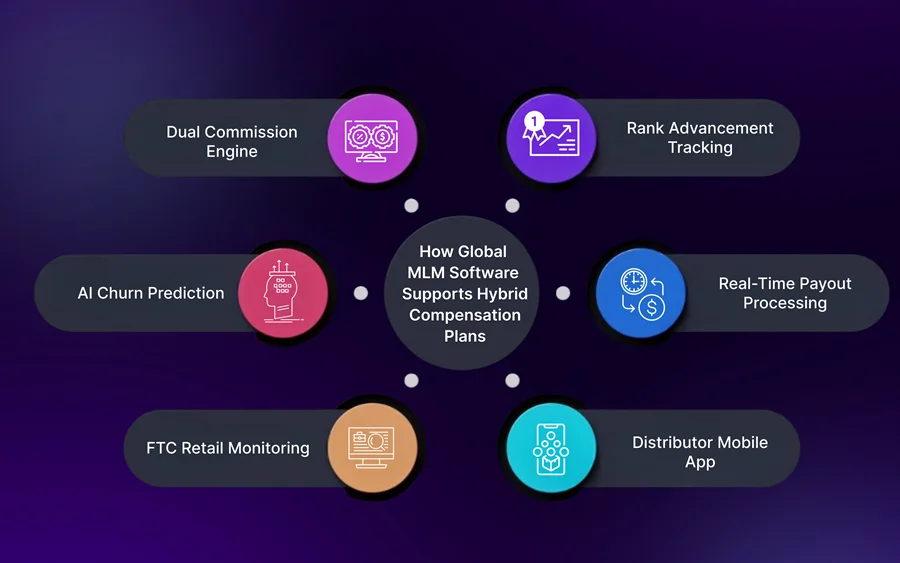
Dual Commission Engine
Binary and Unilevel calculations run in parallel on every transaction. Single consolidated payout per distributor. Zero manual reconciliation between plan components.
AI Churn Prediction
AI analytics identify distributors whose Binary and Unilevel activity is declining before they go inactive. Management alerts trigger re-engagement workflows weeks before churn happens.
FTC Retail Monitoring
Retail-to-recruit ratios tracked across both Binary and Unilevel plan components simultaneously. Per-distributor flags. Exportable audit reports for FTC review.
Rank Advancement Tracking
Multi-criteria rank qualification drawing from both plan components. Real-time advancement notifications to distributors. Gamified milestone incentives layered on top.
Real-Time Payout Processing
Commission calculations processed in real time — not weekly batch runs. Distributors see earnings from personal Unilevel sales reflected the same day. Builds trust. Reduces churn.
Distributor Mobile App
Binary team view, Unilevel downline performance, personal sales tracking, rank progression, and commission history — all in a single mobile app available to every distributor from enrollment day one.

Shabana is a dynamic writer and strategist with profound expertise in network marketing. Her sharp analysis of industry trends and exceptional ability to distill complex concepts into clear, actionable insights make her content invaluable for professionals at every level. Through her writing, she empowers readers to navigate the evolving landscape of relationship-driven sales with confidence and integrity. Blending data-driven strategies with human-centric principles, Shabana provides a unique perspective that helps businesses thrive while maintaining authentic connections.
📋 Free Download: MLM Launch Checklist 2026
Includes a compensation plan selection section — Binary vs Unilevel vs Hybrid evaluation matrix, FTC compliance requirements by plan type, and a 15-point software selection scorecard for verifying Hybrid plan support before you sign.
Frequently Asked Questions
1. Can an existing MLM company switch to a hybrid compensation plan?
Yes. An existing MLM company can migrate from a traditional compensation plan to a hybrid model. However, the transition requires careful planning to preserve distributor earnings, historical genealogy data, commission rules, and rank qualifications. Most businesses use specialized MLM software to ensure a smooth migration with minimal disruption.
2. How does MLM software automate a hybrid compensation plan?
MLM software automatically calculates commissions, bonuses, rank advancements, genealogy updates, and payout reports based on the predefined hybrid compensation rules. Automation minimizes manual errors, improves transparency, and enables businesses to scale without increasing administrative workload.
3. What should businesses consider before designing a hybrid compensation plan?
Before creating a hybrid compensation plan, businesses should evaluate:
Their product pricing and profit margins
Target distributor behavior (sales vs. recruitment)
Commission payout budget
Long-term sustainability
Compliance with direct selling regulations
Software capabilities to support complex commission calculations
A well-balanced plan should reward growth while remaining financially sustainable
4. Is a hybrid compensation plan suitable for startups?
Yes, but only if the business has a clear compensation strategy. Startups often begin with a simpler structure and gradually introduce hybrid features as their distributor network grows. This approach keeps commission management manageable while providing flexibility for future expansion.
5. How can businesses measure the success of a hybrid compensation plan?
Businesses should monitor key performance indicators (KPIs), including:
Distributor retention rate
Recruitment growth
Product sales volume
Average commission payout
Active distributor percentage
Customer retention
Overall profitability
Regular analysis helps identify whether the compensation structure is driving sustainable business growth.
6. Can I launch an MLM company with a Hybrid compensation plan as a first-time founder?
Yes — with the right software and specialist guidance. Start with a simple Binary + Unilevel combination rather than a complex multi-structure Hybrid. A well-designed simple Hybrid delivers the retention and growth benefits without overwhelming new distributors. Global MLM Software supports all major Hybrid plan configurations and includes compensation plan consultation as part of the pre-launch implementation process.
7. What is the most common Hybrid MLM plan combination in 2026?
The most widely used Hybrid in 2026 is Binary + Unilevel, where Binary manages team depth and weak-leg commissions, and Unilevel manages direct referral bonuses and level-by-level retail commissions. The Unilevel Breakaway (Unilevel base with Stair-Step Breakaway layer) is used by large established companies. For startup founders, Binary + Unilevel is the recommended starting point for manageability and FTC compliance.
8. Is a Hybrid MLM plan FTC-compliant in the USA?
Yes, if designed correctly. The FTC requires that compensation comes primarily from retail sales to end consumers — across the entire plan, not just one component. The Unilevel component is naturally retail-friendly. The Binary component requires real-time retail-to-recruit monitoring. FTC-compliant MLM software must track ratios across both plan components simultaneously and generate audit-ready records. The Income Disclosure Statement must cover earnings across the combined plan including zero earners.
9. How does Hybrid MLM software calculate commissions across two plan types?
Hybrid MLM software runs two parallel commission engines simultaneously. The Binary engine tracks left-leg and right-leg volume, calculates weak-leg commissions, applies caps and flush rules. The Unilevel engine calculates level-by-level commissions on direct sales and applies depth limits. Both calculations consolidate into a single payout per distributor, processed in real time, with an audit trail showing each commission component separately.
10. What does it cost to run Hybrid MLM software?
Hybrid MLM software ranges from $700–$1,500/month for startup configurations to $2,000–$5,000+/month for enterprise deployments. Cost drivers: number of plan components, network size, real-time versus batch processing, and customization. Simple Binary + Unilevel is within standard pricing for most platforms. Book a free demo at globalmlmsolution.com/demo for a custom quote based on your plan and network size.
11. If my MLM brand just exited the network marketing model, can I launch my own direct selling company with a Hybrid plan?
Yes — and many experienced distributors from brands that recently pivoted away are doing exactly this in 2026. Your existing network knowledge, distributor relationships, and product experience are significant advantages over first-time founders. A Hybrid plan is optimal for relaunch because the Unilevel side rewards your existing contacts immediately while the Binary side builds long-term depth. Choose software with FTC compliance built in from day one.
12. What is the difference between a Hybrid plan and a Generation plan?
A Hybrid plan combines two structures — Binary + Unilevel — where distributors earn from both simultaneously. A Generation plan pays on the volume gap between ranks across defined distributor generations in a single-structure system. Generation plans are used by large established companies and are too complex for startup founders. For 2026 launches, Hybrid Binary + Unilevel is recommended over Generation plans for lower onboarding complexity and stronger early-stage retention.