Engineering a Revenue Share System for What's On Properties
Discover how a structured revenue share framework brought clarity to commissions, protected margins, and enabled scalable growth for Whats On Properties.
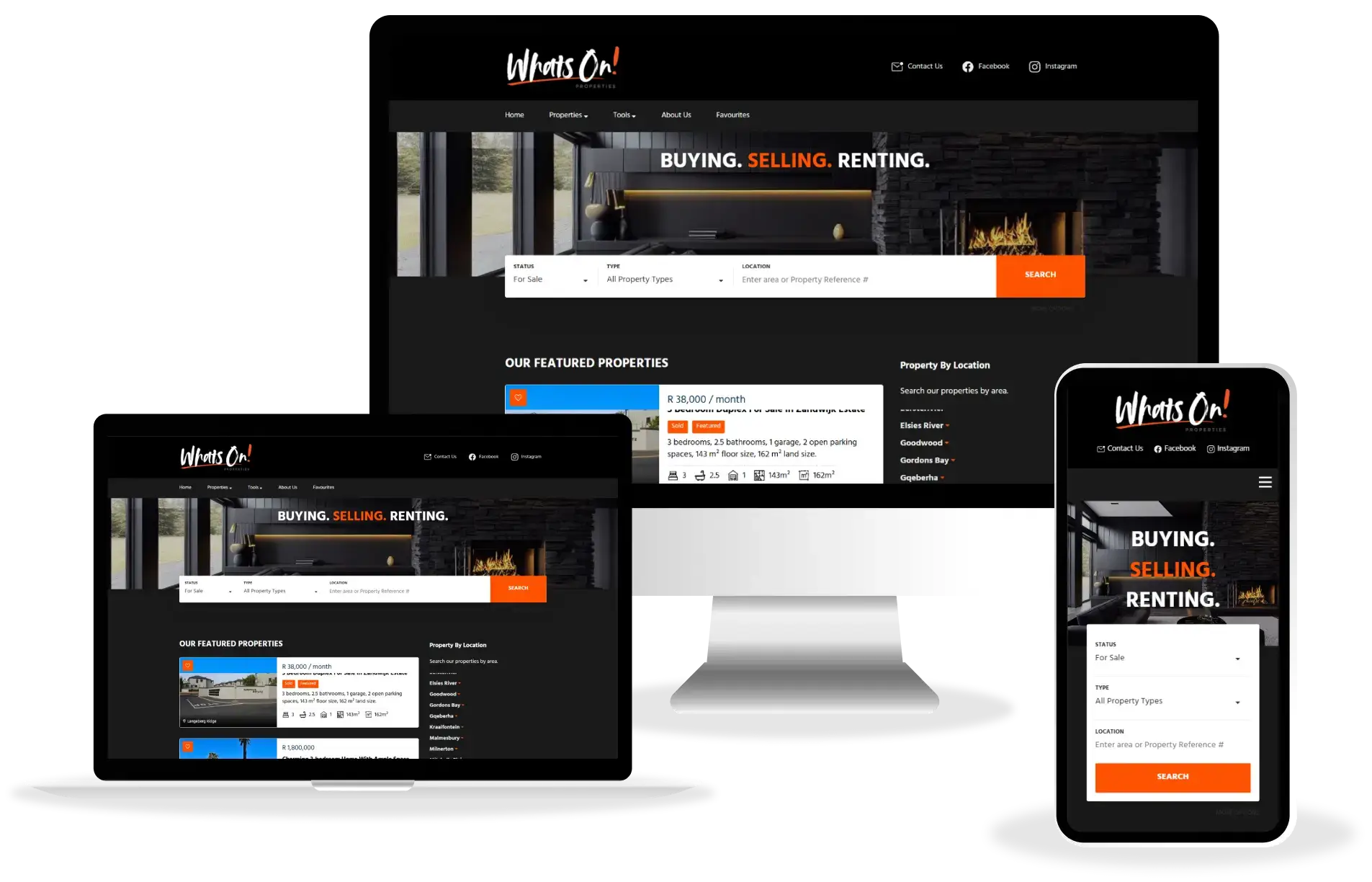
 Meet Whats On Properties
A Commission-Driven Real Estate Brokerage in South Africa
Whats On Properties is a Western Cape–based brokerage operating through a network of property practitioners across residential and commercial markets. The firm runs on defined commission splits and performance-based participation.


Project Overview: What’s On Properties needed a system to automate a brokerage structure with precise commission splits, layered participation, and performance-based eligibility.
Global MLM Solution recommended a revenue share plan and built a custom commission engine with automated splits, hierarchy logic, production tracking, and full audit visibility, creating a stable real estate MLM platform that ensured compensation integrity and supported scalable growth.
Integrations
The Challenge vs The Solution
Bringing Structure to Brokerage-Level Commission Logic
What's on Properties needed a complete system upgrade with automated workflows to manage its MLM operations. The Global MLM Solution Experts identified key structural gaps and replaced them with a governed, rule-driven commission architecture.

The Structural Requirements

Defined Unilevel Hierarchy with Rule-Based Commission Flow
The brokerage required commissions to flow strictly according to a unilevel MLM structure, with earnings distributed only as per predefined logic.
Full Administrative Control Over Commission Configuration
The admin required full control over commission configuration. This included the ability to set payouts in percentage or fixed amounts, define level-based earnings, and apply earning limits at each level. Once a level reaches its cap, no further commission should flow to that tier.
Integrate the 70:30 Revenue Share Model with cap enforcement
Following strategic consultation, a 70:30 revenue share model was introduced. The closing agent would receive 70% of each transaction, while 30% would be distributed across the upline structure. Each agent also required an annual cap. Once reached, their commission share would increase to 85%, and upline payouts would stop.
Annual Financial Reset Governance
With the South African financial year beginning on 1st March, all production metrics, caps, transactions, and rank calculations need to reset annually. Historical data, however, had to remain preserved for reporting and compliance.
Controlled Transaction Lifecycle and centralized visibility
To ensure commission accuracy, only administrators were authorized to create and close transactions. All closed deals and credited commissions needed clear visibility within the admin dashboard. Agent ranks — Gold, Silver, and Titanium — had to update automatically based on verified production.
Seamless Agent Onboarding & Communication
The brokerage required a smooth and professional registration process for new agents, supported by automated communication workflows.
Entegral Data Synchronization
Transaction data from Entegral needed to be synchronized with the MLM platform to ensure eligible commissions were calculated accurately.

The Implemented Solution

Custom Unilevel Commission Engine
Global MLM Solution built a rule-driven unilevel MLM software engine that hard-coded payout flow within the defined hierarchy. Payouts now distribute automatically up to five upline levels only. This ensures consistent enforcement and predictable outcomes across every transaction.
Admin-Controlled Commission Governance
A centralized commission control panel was implemented. This allowed the admin complete flexibility to configure and adjust commission rules. The system automatically enforces level limits and stops payouts once thresholds are reached.
Embedded 70:30 Revenue Share Logic
The platform was configured to execute the 70:30 split automatically upon deal closure. Real-time cap tracking ensures that once an agent reaches their annual threshold, the payout shifts to 85%, and upline commissions are suspended instantly without manual intervention.
Cron-Based Annual Reset Mechanism
A scheduled cron-based automation was implemented to execute a clean system-wide reset every 1st March. The reset recalibrates performance metrics while maintaining complete historical records.
Centralized Transaction Authority & Rank Automation
The platform enforces admin-only transaction closure to ensure commission triggers remain accurate. A centralized dashboard provides real-time visibility into transactions, payouts, and rank progression. All these were calculated directly from validated data.
Seamless Registration Flow & Brevo Email Integration
A streamlined registration module was implemented. It was further integrated with Brevo for automated onboarding emails and communication sequences. This ensures consistent engagement from the moment an agent joins the platform.
Entegral Integration for Data Accuracy
A structured integration was implemented to pull verified transaction data from Entegral. The admin then created transactions for each agent. Payouts were dispersed through the payment system embedded in the base software.
Strategy and Execution
Engineering a Revenue Share System Built for Brokerage-Grade Stability
Designing a revenue share structure inside a real estate brokerage requires financial discipline. The delivery approach was structured around protecting brokerage economics while building a scalable unilevel framework.

Competition Architecture Design & Margin Protection
Before the system configuration began, the revenue share model was evaluated from a financial standpoint. The team mapped how commission would flow across multiple growth scenarios, including deep hierarchies, cap exhaustion, and high-volume transaction cycles.
This ensured the 70:30 structure rewarded participation without compromising brokerage margins over time.

Stress Testing Cap & Level Boundaries
Cap enforcement and five-level payout limits were not treated as surface rules. They were tested under simulated high-production environments to confirm that once thresholds were reached, commission shifts occurred precisely, without leakage beyond defined limits. This eliminated future payout disputes before launch.

Hard-Coding Governance into the Core Engine
The team embedded the commission governance directly into the system logic rather than relying on administrative oversight. Features like level limits, cap-triggered 85% transitions, and upline suspensions were engineered as conditional rules. The system was also tested to enforce this discipline automatically, even as the network grows.

Financial-Year Cycle Engineering
The March-1 financial reset was treated as a structural accounting event. The team implemented a cron-based automation to reset production, caps, and ranks at the exact start of the financial cycle while preserving historical performance records. This ensured clean year-on-year tracking without data corruption.

Controlled Activation & First Cycle Validation
The team executed the Go-live in a monitored rollout. Early transitions were reviewed against expected payout outputs to validate omission behavior in live conditions. This approach reduced exposure during the first production cycle and reinforced confidence before full operational scale.

Administrative Governance & Dispute Prevention Framework
Next, the team worked on centralizing the administrative controls for creating transactions and closures. This was to ensure that only the admin could trigger the payouts. The system was also designed to provide clear dashboard visibility into transactions, credits, and rank progression to reduce ambiguity and minimize potential compensation disputes.

Integration Discipline & Data Integrity Assurance
Integration with Entegral was then taken up by the team. The system was designed to pull agent data from Entegral. The admin would use this data to create payouts based on verified transactions.
Audit Trail & Financial Traceability Architecture
Every commission-triggering event was designed to generate a traceable record. The system logs transaction validation, payout calculations, cap triggers, and revenue share distributions in a structured audit trail. This ensures the admin can review the commission history at any point.

Operational Training
Before final handover, administrative stakeholders were trained on configuration controls, cap monitoring, rank governance, and financial-year resets. This ensured the brokerage retained operational control and could manage its compensation framework with confidence.
The Results
A Revenue Share Architecture Designed for Sustainable Growth
The updated unilevel model integrated with the revenue share plan helped Whats on properties move from outdated systems to a governed framework. The brokerage underwent business transformation in key areas:

Financial Control & Margin Protection
The 70:30 revenue share structure, five-level limits, and cap-triggered commission shifts now operate automatically within enforced system rules. This protects brokerage margins while maintaining strong performance incentives for agents.

Reduced Dispute & Operational Risk
Admin-controlled transaction validation and rule-based commission distribution remove uncertainty from payouts. Clear logic and centralized visibility significantly reduce the likelihood of compensation disputes as the network grows.

Competitive Agent Positioning
A transparent revenue participation model strengthens the brokerage’s value proposition. Predictable earnings, defined progression tiers, and structured incentives are now important factors for agent attraction and long-term retention.

Scalable Revenue Predictability
The annual financial resets, cap governance, and validated transaction synchronization have helped the leadership gain clearer forecasting visibility. The commission framework remains stable even as transaction volumes increase and hierarchies deepen.
Executive-Level Operational Visibility
Centralized dashboards provided admins with real-time insight into production performance, cap exposure, commission distribution, and rank progression. This enables more informed decision-making and better strategic planning.
Improved Process Efficiency
Automated commission enforcement and structured transaction workflows reduce manual oversight. The brokerage now operates with standardized processes that improve internal efficiency and reduce administrative burden.